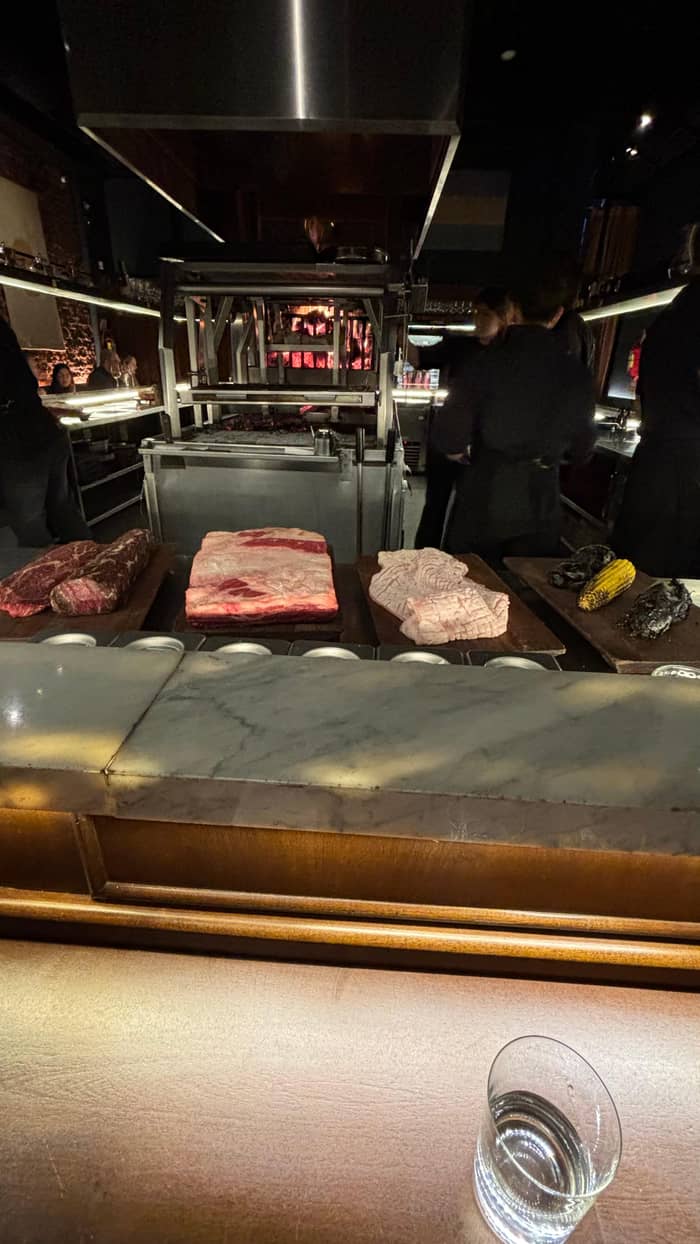
Chef explains cuts
Grill counter tasting
Courses cooked in front of you
- Courses9
- SeatAt the grill
- WineOptional
Group price check
Compare 4 choices
Choose a tasting and set the number of guests.
≈
View≈
View≈
View≈
ViewStarting prices from GetYourGuide, converted at the ECB reference rate. You will see the exact price when booking.
A menu of Argentinian steak and asado cuts in Buenos Aires can read like code. Here are the names, what each cut is, what a kilo costs at the butcher and how to ask for it cooked.
Editorial team, buenosairesasado.click · Updated November 9, 2026 · A 7 min read
Argentinian steak and asado cuts in Buenos Aires follow their own butchery. The city tourism board says plainly that Argentine beef cuts are very different from those of other countries, and its English guide warns visitors that the names may not match the ones at home.9,10 A rib steak in one place becomes two separate cuts here, and some cuts barely exist outside the country.
Even official translations disagree. The city tourism board glosses bife de chorizo as rib eye or entrecôte, often cut butterfly-style, while Visit Argentina calls the same cut strip loin.4,3 The safest approach is to learn the Spanish names and treat the English ones as rough guides. Waiters at a busy parrilla are used to pointing at a chart or a cut on a neighbor's plate.
Many menus also offer a parrillada, a mixed grill that the board describes as usually served for two or more people to share.11 It brings a little of everything, often with offal included, and suits a first visit. If you prefer to choose, order one fatty cut and one lean cut for the table and share them, the way locals do at an asado.
Cut by cut
| Cut | English name | ARS per kg |
|---|---|---|
| Asado de tira | Short or chuck ribs | 17,744 |
| Vacío | Flank | 21,382 |
| Matambre | Thin cut over the ribs | 17,728 |
| Bife ancho | Boneless prime rib steak | 17,799 |
| Lomo | Tenderloin | 28,681 |
| Cuadril | Rump | 21,509 |
| Tapa de asado | Rib cap | 17,383 |
English names from the city tourism board where it gives them; prices are IPCVA's October 2026 metro-area retail averages in pesos.1,2,25,8,22,20,26,24,27,28
For asado argentino on the parrilla, the defining cut is the asado de tira, which the city tourism board translates as short or chuck ribs.1 It is a strip cut across the ribs, so each piece holds several short bone sections with fat and meat between them. Cooked slowly, the fat renders and the edges turn crisp, which is exactly what locals look for.
Rib cuts come in several shapes. At El Ferroviario, a neighborhood grill in Liniers, the city board lists asado de tira, americano and ancho on the menu, and at La Choza de Gascón it notes asado in banderita or ancho form.17,18 When you see these variations, ask the waiter how the ribs are cut that day and how many people a portion feeds.
On a ranch day, ribs are often cooked whole on stakes around the fire. The national tourism office names vacío and asado de tira as the usual cuts for asado a la estaca.19 In town, the same cut arrives sizzling on a plate or a small brazier. Either way, eat it with your hands near the bone; nobody will mind.
Vacío is flank, says the city tourism board, a thick cut with a layer of fat on one side that crisps on the grill.2 Visit Argentina lists it among the famous asado cuts next to entraña, the skirt steak, a long thin cut with a deep beefy taste that cooks fast.3 Both are favorites at home asados because they feed a crowd and forgive a little extra time on the coals.
Matambre is the thin layer between the skin and the ribs. The national tourism office places it in the main round of an asado, after the sausages, alongside the tira de asado and vacío.32 On menus you will also see matambrito, the pork version, which the city board lists at La Choza de Gascón and El Ferroviario.18,17
These cuts are where Argentine grilling shows its skill. Vacío and matambre need slow heat to turn tender, and a rushed fire leaves them chewy. If you see entraña on a menu, order it a punto or jugoso and eat it hot; it cools and toughens quickly. Vacío is better shared, sliced across the grain at the table, with chimichurri on the side.
Ordering
Match your taste to a cut, then ask for it by its Spanish name.
If I like lean and tender
Lomo or cuadril
Lomo is tenderloin and cuadril is rump, the lean end of the menu.1,2
If I want fat and flavor
Asado de tira or vacío
Short ribs and flank both carry fat that crisps on the grill.1,3
If It is my first parrilla
Provoleta, then a steak
Open with grilled provoleta and follow it with short ribs or a bife de chorizo, as the city tourism board recommends.29
If I like my steak pink
Say jugoso
Jugoso means medium-rare; locals cook meat longer by default.13,6
If I want to try something new
Order mollejas
Taste the cuts
Chef explains cuts
Courses cooked in front of you
Hands-on
Tasting, cooking and wine
Evening out
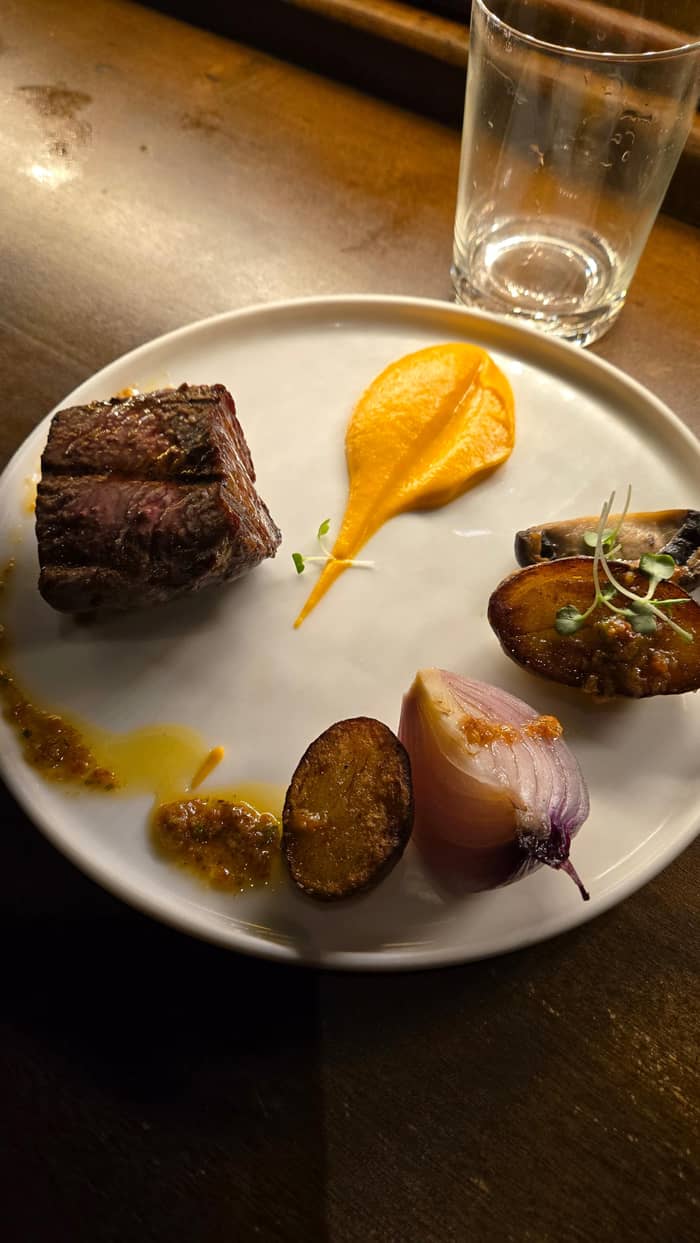
A set menu in a garden
For a single steak, the city tourism board points to bife de chorizo, ojo de bife, the center part of boneless prime rib steaks, and lomo, the tenderloin.4,5,1 It also names bife ancho, boneless prime rib steak, and cuadril, the rump.25,2 Lomo is the leanest and most tender; bife de chorizo has more chew and a fat cap that carries flavor.
Newer parrillas have broadened this list. According to the board, modern grill houses added ojo de bife, entraña, tapa de bife ancho and tapa de cuadril to the traditional cuts.36 At Don Julio in Palermo, the owner Pablo Rivero told Visit Argentina he recommends the bife de chorizo ancho and the leaner bife de cuadril.37
At Don Zoilo in Villa Crespo, the city board suggests opening with some achuras and then trying the house cuts, where colita de cuadril, entraña and asado de tira sit beside both the wide and the narrow bife.33 That sequence works almost anywhere. A shared offal starter, then one rib or flank cut and one steak for the table, gives you the range without ordering a mountain of meat.
Achuras, the offal, open most asados, and Visit Argentina calls them stars of the ritual.38 The city tourism board's glossary gives the names you will meet: morcilla is blood pudding, mollejas are sweetbreads, chinchulines are small intestines and riñones are kidneys.39,31,40,41 They come off the grill early, while the big cuts are still cooking, and they are meant to be shared in small pieces.
If you try only one, make it mollejas. Grilled until the outside is crisp, sweetbreads are mild and rich, and lemon is the usual partner. The board's own note on La Choza de Gascón says the mollejas there never fail.42 Morcilla is softer and sweeter than many blood sausages, and it is often spread on bread.
Chinchulines divide opinion; they are crunchy when cooked well and chewy when not. Ask whether they are cooked crisp, crocante in Spanish, before you order. Achuras are usually cheap compared with steaks, so a shared plate is a low-risk way to taste the full range of an asado without committing to a whole portion.
Video
Mad Scientist BBQ on YouTube · Nothing is fetched until you hit play.
locals prefer the meat to be more thoroughly cooked than in the northern hemisphere
At the table
Doneness is where many visitors go wrong. The city tourism board's advice is that locals generally prefer meat more thoroughly cooked than people in the northern hemisphere, so you may have to ask for a notch lower than usual.6,7 If you want medium-rare at home, ask for jugoso here. If the waiter repeats the word back with a raised eyebrow, that is normal: you are asking for less time on the coals than most locals would.
The board's ladder runs like this: vuelta vuelta means rare, jugoso medium-rare, a punto medium and cocido well done.12,13,14,16 In its Spanish guide, the board adds that some people like meat a punto, cooked outside and a little less inside.15 Learn just two words, jugoso and a punto, and you can order almost any steak.
Seasoning is simple. Locals often eat steak with nothing more than salt, says the board, and chimichurri is there if you want it.34 The city's recipe blends garlic, oil, wine vinegar and pepper with parsley, oregano and other herbs.43 Taste the meat first, then add sauce; a good parrilla will not be offended either way.
Planning your own asado in an apartment, or just curious what locals pay? The Argentine Beef Promotion Institute, IPCVA, publishes a monthly retail survey for the Buenos Aires metro area, and its October 2026 report covers the area together with Rosario and Córdoba.44 Locals search for this as precio kilo asado, the price of a kilo of asado.
In that report, a kilo of asado de tira cost ARS 17,744, vacío ARS 21,382 and matambre ARS 17,728.8,22,20 Lomo, the priciest cut, came to ARS 28,681 per kilo, and the average for beef was ARS 18,526.24,45 Over the year, asado de tira rose 53.7% in that survey.46 Expect the figures to move again by the time you shop.
Prices are in pesos, as IPCVA states them; check current rates before you convert. For context, a kilo of asado bought on average 3.57 kilos of chicken that month.47 If you would rather eat than shop, the tasting sold on this site serves a run of Argentine cuts cooked on the grill in front of you, from $93, with the chef explaining each one.
FAQ
The city tourism board suggests a grilled provoleta, followed by asado de tira or a bife de chorizo steak.29
The city tourism board translates vacío as flank and cuadril as rump.2
Sources
Next read
Hungry for asado? Ask a real person here.