Farm and folklore
Small-group farm day
Areco, estancia and folklore
- Length9 hours
- GroupUp to 30
- GuideEnglish, Spanish, Portuguese
Group price check
Compare 4 choices
Choose a ranch day and set the number of travelers.
≈
View≈
View≈
View≈
ViewStarting prices from GetYourGuide, converted at the ECB reference rate. You will see the exact price when booking.
A gaucho asado from Buenos Aires means a day in the Pampas: meat roasted slowly beside an open fire, horses, folk music and, in November, the oldest criollo festival in the country.
Editorial team, buenosairesasado.click · Updated November 9, 2026 · A 7 min read
Visit Argentina describes the gaucho as the criollo or mestizo man who lived in the Argentine countryside in the 18th and 19th centuries.7 He was a nomadic horse rider, a cattle raiser, a thrower of boleadoras and an expert at rodeo and taming.8 His world was the open grassland, and his meal was meat roasted beside a fire.
The national tourism office places the cradle of gaucho culture on the Pampas plain, where asado, the guitar and mate are never missing.9 Literature made the figure a national symbol: Visit Argentina calls Martín Fierro, the epic about a gaucho, the great national poem.10 Today the tradition is kept by people who still work the land and by towns that celebrate it.
In San Antonio de Areco, Visit Argentina invites visitors to meet the paisanos, a fusion of gauchos and immigrants.11 A countryside asado may arrive with homemade bread, empanadas and wine from the provinces, which makes a gaucho asado from Buenos Aires a very different day from a dinner in town.
Calendar
| Event | Where | When |
|---|---|---|
| Día de la Tradición | San Antonio de Areco | 10 November |
| Feria de Mataderos | Mataderos, Buenos Aires | Sundays and holidays |
| Mataderos special editions | Mataderos, Buenos Aires | 25 May, 20 June, 9 July, 17 August |
| Festival del Asado y la Empanada | Hipódromo de Palermo | Late September, when held |
| Asador Criollo national festival | Miguel Riglos, La Pampa | Yearly |
Dates from the national tourism office and the Buenos Aires city tourism board; check each year before you travel.17,6,18,19,20
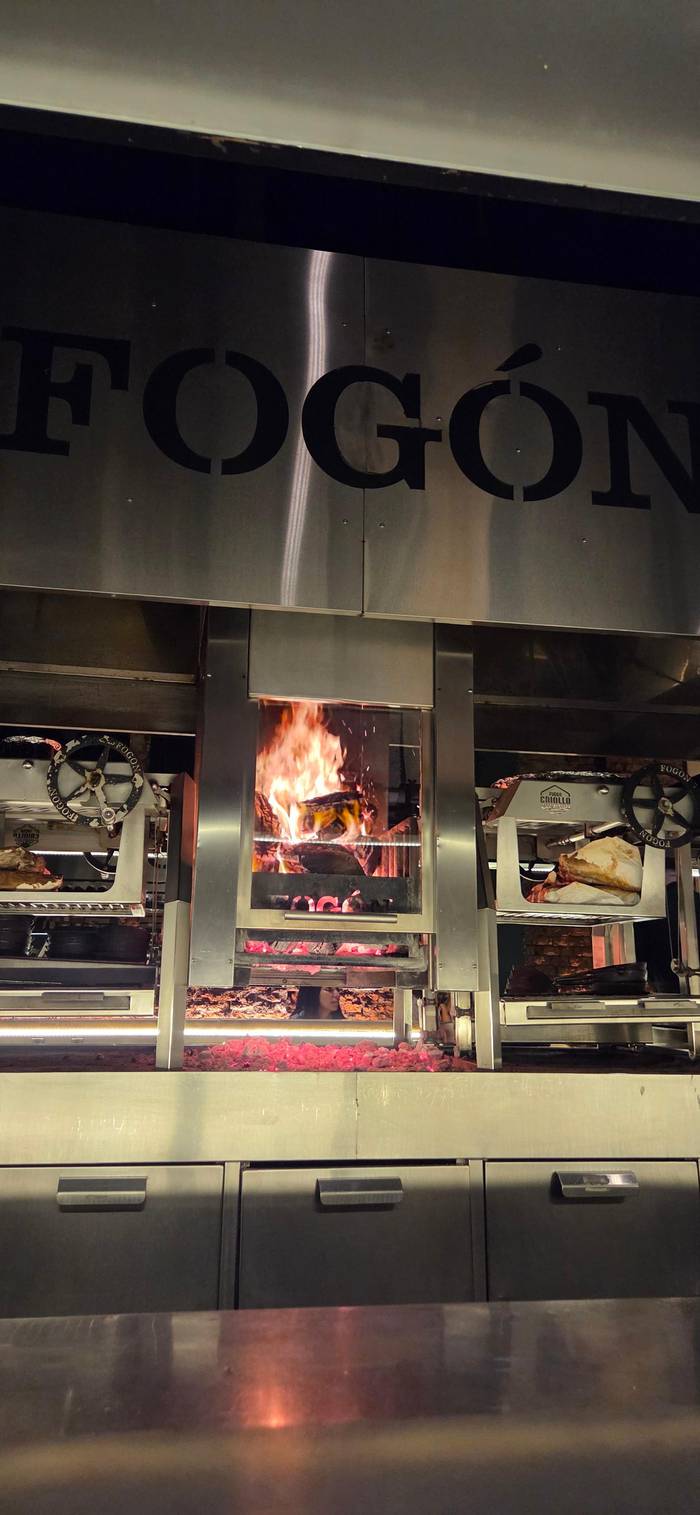
The countryside method differs from the city grill. The national tourism office calls asado a la estaca, with meat speared on stakes leaning toward the fire, the most rural and traditional way to roast meat today.3 Vacío and asado de tira are the usual cuts for it.12 On menus you will also see it written as asado al asador, roasted on the asador, the upright frame beside the fire.
In San Antonio de Areco, Visit Argentina suggests trying asado with the hide still on, grilled on a metal cross.4 Further south the same idea is used for lamb: in Patagonia, the meat goes on an iron cross tilted toward the fire, and the asador grills it slowly and evenly, adds brine and turns it at the right time.13,14 Expect a long wait and a deep, smoky crust.
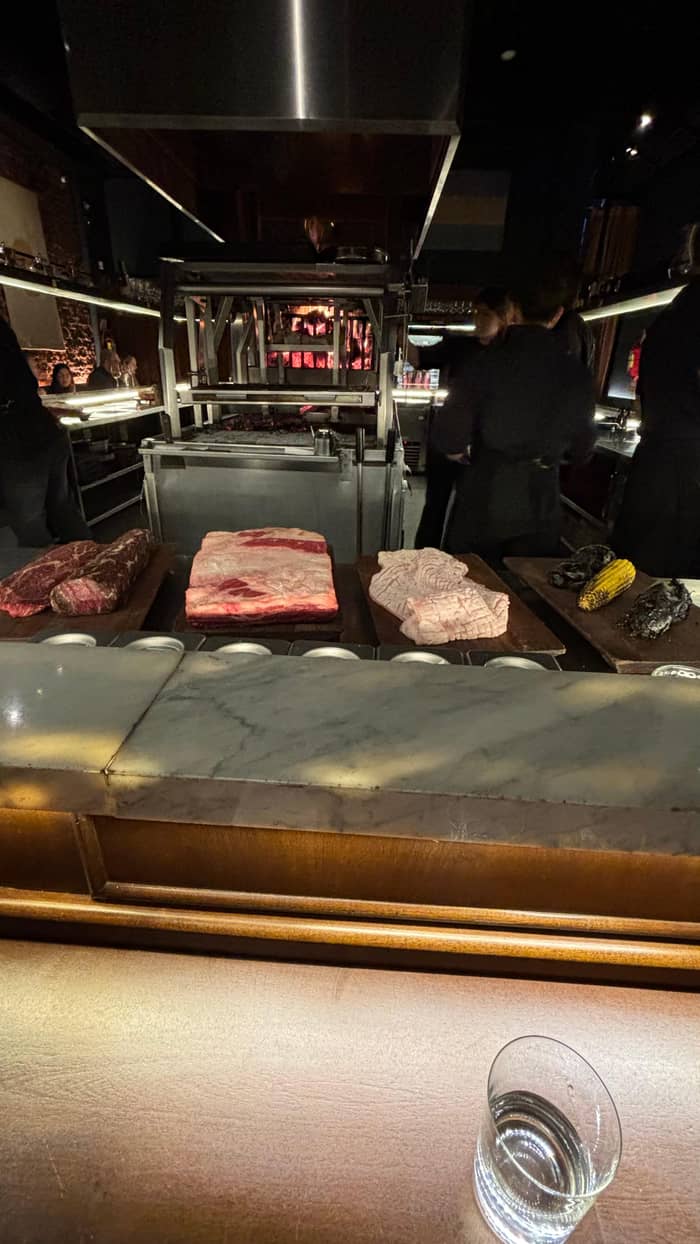
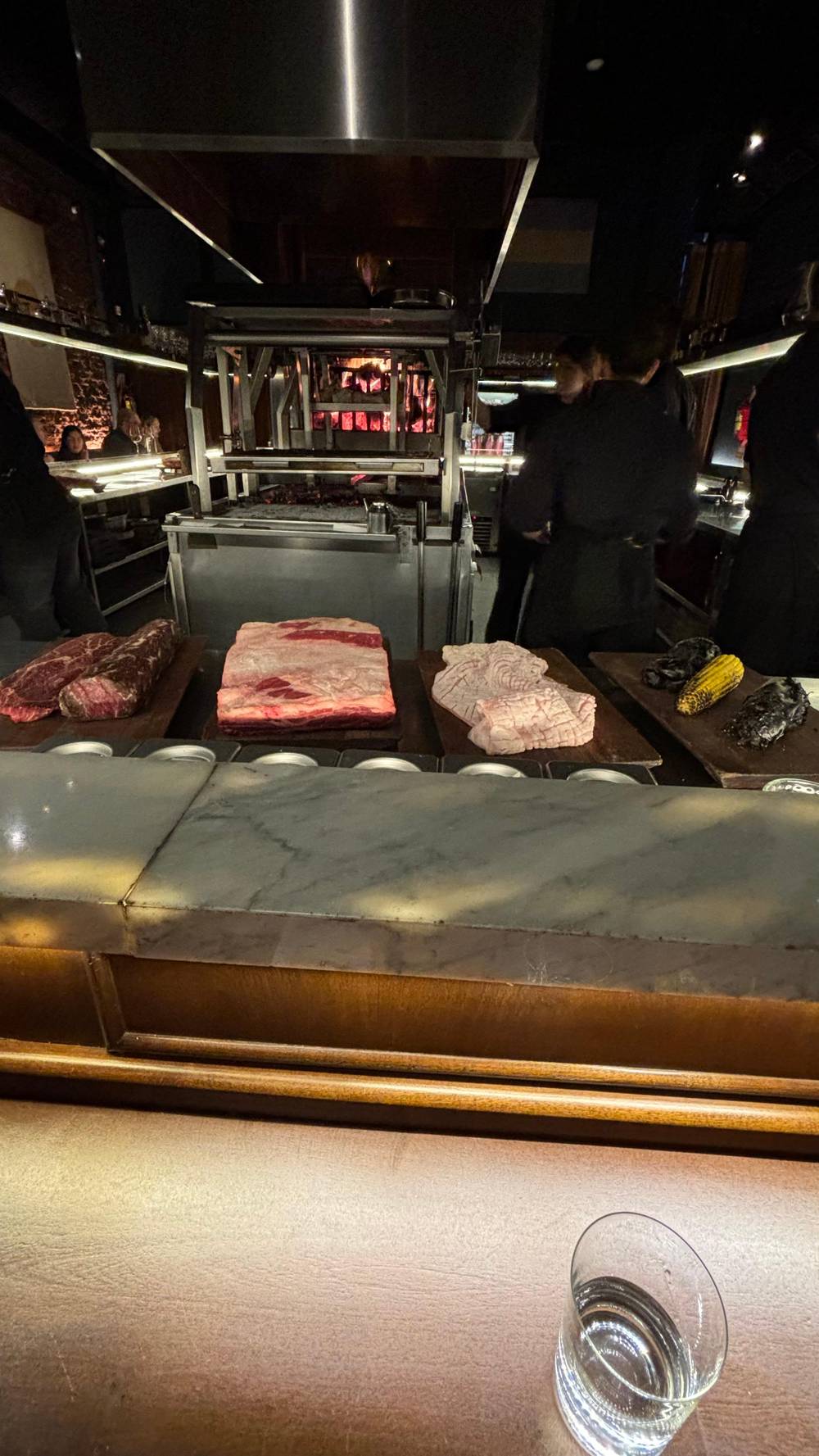
You can see the method in town too. The city tourism board describes the Four Seasons grill in Buenos Aires as having an asador criollo next to its clay ovens.15,16 But the setting changes everything. A rack of ribs leaning over embers in an open field, with the smoke drifting over the horses, is the version people travel out of the city to see.
Where the hours go
Times as the itinerary of the ranch day sold on this page lists them; the return drive comes on top.
Visit Argentina's advice for the gaucho experience is to spend a day at a tourism ranch near San Antonio de Areco and taste an asado while watching a folklore dance show.2 It adds that ranches should be booked in advance.25 The town sits 113 km from the city by Ruta Nacional 8, with bus lines from Buenos Aires.1,26
The day trip this page sells handles the logistics. It is a 9-hour day to a farm in San Antonio de Areco with a village visit, a silversmith workshop, horse rides at an estancia, a barbecue lunch, a folklore show and a gaucho skills demonstration, from $168. Groups go up to 30, and the fare is refunded in full when a booking is dropped with 24 hours to spare.
Similar days exist on GetYourGuide. One collects guests from 6 points including Palermo, Recoleta and San Telmo and gives 5 hours to the ranch itself, with lunch, riding and a traditional dance show. Another keeps groups to 15 and adds a silversmith visit and 3 hours in the Pampas. Compare them in the calculator below by group size.
Pick your gaucho day
Your free day and the calendar decide most of it.
If I have a full day
A ranch day in Areco
Horse rides, a barbecue lunch and a folklore show.
If It is a Sunday
The Feria de Mataderos
Stalls, folk music and carne al asador in the city.21
If I am here in November
The Fiesta de la Tradición
The oldest criollo celebration, says Visit Argentina.5
If I want to stay overnight
An estancia near Areco
If I want a souvenir
A facón from a maker
Gaucho knives are sold at the Mataderos stalls.24
Ranch days
Farm and folklore
Areco, estancia and folklore
Hotel pickup
Pickup from 6 barrios
Smaller group
Silversmith and the Pampas
San Antonio de Areco is the heart of gaucho country near the capital. The national tourism office describes a riverside lined with restaurants, where grilled food takes center stage, and the Puente Viejo, the old bridge, leading to the Ricardo Güiraldes Gaucho Museum.29,30 Visit Argentina adds general stores that have kept their style for 200 years.31
The estancias around town each have a story. The provincial tourism office says Estancia El Ombú was built by Lieutenant General Pablo Riccheri in 1880, 11 km from the town center.22 La Bamba dates back to 1830, when its colonial-style house was a post on the Camino Real.32 La Porteña was built in the 19th century and declared a National Historic Monument.23
For the food, the same office notes that La Cinacina's kitchen specializes in asado and criollo dishes.33 Most organized day trips choose the ranch for you, so if a particular estancia matters, check the itinerary first. Pack for the season: Visit Argentina says that in summer, from December to March, a light jacket for the evening is enough.27
The ranch day
Morning
Across the Pampas to Areco, about 180 minutes.
Late morning
Short stops at a silversmith and a chocolate shop.
Midday
A brief visit in the town center.
Lunch
Horse rides and the barbecue lunch.
Afternoon
A folk show and a demonstration of gaucho skills.
The biggest date is in November. Visit Argentina calls the Fiesta de la Tradición in San Antonio de Areco the oldest criollo celebration in the country.5 The national tourism office says the Día de la Tradición is celebrated on 10 November with gaucho parades, jineteadas, the rodeo-style riding, and typical food.17 Book a bed early if you want to stay overnight that weekend.
People searching for a Fiesta Nacional del Asado near Buenos Aires usually mean one of several events. The national tourism office lists the national festival of the asador criollo, held every year in Miguel Riglos in La Pampa province, a long way from the capital.20 Within the city itself, the tourism board has listed a Festival del Asado y la Empanada at the Hipódromo de Palermo, the racecourse.19
Its latest listed edition ran on a Saturday and Sunday in late September, with more than 35 stands and food trucks and free entry.19,34,35 The board promised every cut, cooking method and style from grill masters across the country.36 Check the city's events page when you travel, as dates change from year to year.
Video
Samuel and Audrey on YouTube · Nothing is fetched until you hit play.
Spend a day at a tourism ranch in the area and taste a good asado while watching a folklore dance show
No time for the countryside? The Feria de Mataderos brings it to the western edge of the city. The City of Buenos Aires says it was created in 1986 to promote the country's traditions, with workshops, folk dances and demonstrations of gaucho skills.37,38 It stands opposite the old National Livestock Market, where cattle from the Pampas were checked and sold.39
The city tourism board's English page says the fair draws around 15,000 people every weekend to up to 700 stands, with horse-riding contests and games of pato.40,41 At the food stalls you can choose empanadas, locro, choripán and carne al asador.21 In the early 20th century, the barrio was even called Nueva Chicago, after the meat city.42
Official hours differ by source. The tourism board's English page gives Sundays and public holidays from 11 AM to 8 PM, April to December, while the City of Buenos Aires gives Sundays and national holidays from 11 to 18.6,43 Go before lunch to be safe. Special editions run on 25 May, 20 June, 9 July and 17 August, the patriotic dates.18
Among the leather goods and silverwork at Mataderos, the tourism board lists facones, the long gaucho knives, next to mates, ponchos and blankets.24 The ranch day on this page includes a stop at a silversmith's workshop in San Antonio de Areco, where you can see silverwork being made. A good knife is a lifelong souvenir and a working tool at any asado.
Asado knives need care on the flight home. The US Transportation Security Administration says knives are not allowed in carry-on bags and are allowed in checked bags.28 It asks that any sharp object in checked luggage be sheathed or securely wrapped to protect baggage handlers and inspectors.44 Other countries and airlines set their own rules, so check before you pack.
Buy from a maker who can tell you about the steel and the silver, and keep the receipt. If you are flying with hand luggage only, consider a smaller souvenir: a mate gourd, a silver bombilla or a woven belt are easier to carry. Whatever you bring home, the best souvenir of a gaucho day is the memory of the fire, the smoke and the long lunch.
FAQ
The Día de la Tradición is celebrated on 10 November with gaucho parades, jineteadas and typical food.17
The ranch day on this page lasts 9 hours with lunch, horse rides and a folklore show.
Visit Argentina says a light jacket is enough for summer evenings in Areco; closed shoes help around the horses.27
Sources
Next read
Hungry for asado? Ask a real person here.